Why a Fire Hydrant System Is Critical for Commercial Building Safety and Compliance
When it comes to protecting commercial buildings from fire hazards, few investments are as important or as legally mandated as a properly installed and maintained Fire Hydrant System. Whether you operate a warehouse, a corporate office, a shopping mall, or a manufacturing facility, a Fire Hydrant System forms the backbone of your building’s active fire suppression infrastructure. It provides the water supply, pressure, and delivery mechanism needed by firefighters and on-site personnel to control and extinguish fires before they escalate into catastrophic losses.In this blog by I focus solutions we explore what a Fire Hydrant System is, why it is non-negotiable for commercial buildings, how it supports regulatory compliance, and what building owners in Bangalore need to know about installation and ongoing maintenance.
What Is a Fire Hydrant System?
A Fire Hydrant System is a network of underground or above-ground pipes, pumps, valves, and outlet points (hydrants) designed to deliver high-pressure water to areas affected by fire. In a commercial building, this system typically includes an underground storage tank or water reservoir, electric and diesel pumps, a jockey pump for pressure maintenance, a ring main piping network, and strategically placed hydrant outlets with hose reels.Unlike sprinkler systems that activate automatically, a Fire Hydrant System is primarily used by trained fire personnel and building fire brigades to manually control firefighting operations. It serves as the primary water source during emergencies, ensuring that fire responders are never left without the resources they need.
Why Commercial Buildings Cannot Afford to Ignore It
The scale and occupancy of commercial buildings make them significantly more vulnerable to large-scale fires than residential properties. Here is why having a Fire Hydrant System in place is absolutely critical:
High Occupancy Risks: Commercial spaces often house hundreds of employees, customers, and visitors simultaneously. A fire in such an environment can turn deadly within minutes if there is no reliable firefighting infrastructure.
Larger Floor Areas: Office complexes, retail stores, and industrial facilities cover vast areas. Portable fire extinguishers alone are insufficient — only a Fire Hydrant System can deliver the volume of water required to suppress fires across large spaces.
Valuable Assets: Commercial properties contain expensive equipment, inventory, and data. A fire without an adequate suppression system can result in irreplaceable losses.
Business Continuity: A major fire incident, especially one that could have been contained with a proper Fire Hydrant System, can shut down operations for weeks or months, causing significant financial damage.
Legal Liability: Building owners and occupiers have a duty of care. The absence of a functional Fire Hydrant System can result in serious legal consequences, especially in the event of injuries or fatalities.
Regulatory Compliance: What the Law Requires
In India, fire safety in commercial buildings is governed by the National Building Code (NBC) 2016, state fire safety regulations, and guidelines issued by local fire departments. Under these frameworks, commercial buildings above a certain height or floor area are mandated to install a Fire Hydrant System as part of their active fire protection measures.Key compliance requirements include:
Installation of hydrant outlets at every floor level and at external locations accessible to fire tenders.
Adequate water storage capacity — typically a minimum of 50,000 litres for medium-sized commercial buildings.
Pump sets (electric + diesel standby) capable of maintaining minimum pressure as per NBC specifications.
Regular testing, inspection, and maintenance of the entire Fire Hydrant System.
Certification from the local fire authority, which is required for occupancy certificates and renewal of fire NOC (No Objection Certificate).
Non-compliance can attract heavy penalties, forced closure of the building, or rejection of the fire NOC — all of which can disrupt business operations and damage reputations.
Key Components of an Effective Fire Hydrant System
A well-designed Fire Hydrant System is more than just a pipe and a valve. To perform reliably during emergencies, the system must incorporate the following components:
Underground Water Tank: A dedicated fire water storage tank, separate from the domestic water supply, ensures that adequate reserves are always available.
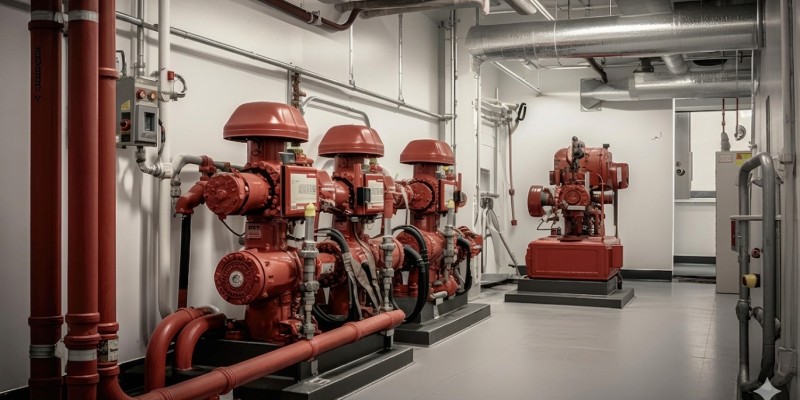
Pump House: Houses the main electric pump, standby diesel pump, and jockey pump. The jockey pump maintains system pressure and detects leakage.
Ring Main Piping: A looped network of pipes ensures water reaches every hydrant point, even if a section of the pipe is damaged.
Internal Hydrants: Located in staircase lobbies or corridors, these are accessible to building occupants and fire teams within the structure.
External Hydrants: Positioned at building periphery to enable fire tenders to connect and draw water during large-scale firefighting.
Hose Reels and Nozzles: Flexible hoses allow water to be directed precisely at fire sources in confined or hard-to-reach areas.
Pressure Gauges and Valves: Enable manual control of water flow and help monitor system health at all times.
The Importance of Regular Maintenance
Installing a Fire Hydrant System is only the first step. The system must be tested, serviced, and maintained on a regular basis to ensure it functions correctly when needed. Routine maintenance includes checking pump operation and pressure, inspecting pipe joints for leaks or corrosion, verifying that all hydrant outlets open and close freely, testing the diesel backup pump for automatic activation, and auditing water tank levels.Building managers should also ensure that fire extinguishers installed throughout the premises are serviced regularly. Many businesses overlook this detail, leading to extinguishers that are corroded, under-pressurized, or expired when needed most. Engaging a provider that offers fire extinguisher refilling services ensures that every line of fire defence in your building — from portable extinguishers to the hydrant network — remains operational and code-compliant.
Choosing the Right Fire Safety Partner in Bangalore
For businesses in Bangalore, selecting a knowledgeable and experienced fire safety provider is paramount. The city’s rapid commercial expansion has led to a growing number of high-rise offices, tech parks, and industrial corridors — all of which demand sophisticated Fire Hydrant Systems designed to meet both NBC standards and local Karnataka fire department guidelines.When evaluating fire protection companies in Bangalore, look for providers who offer end-to-end services — from initial fire risk assessment and system design to installation, testing, and annual maintenance contracts (AMC). A comprehensive partner will ensure your Fire Hydrant System is not just installed correctly but remains in peak condition throughout its lifecycle.IFS India (ifsind.com) is a trusted name in fire safety solutions, providing commercial and industrial clients across Bangalore with industry-compliant Fire Hydrant Systems, fire suppression installations, and ongoing support services. With a team of certified fire safety engineers and a portfolio spanning diverse commercial verticals, IFS India brings the expertise needed to design systems that are both effective and regulation-ready.
Fire Hydrant System vs. Other Fire Suppression Methods
While a Fire Hydrant System is foundational, it works best as part of a layered fire protection strategy. Here is how it complements other systems:
Sprinkler Systems: Activate automatically but deliver limited water volume. A Fire Hydrant System provides the sustained high-volume flow needed to tackle larger blazes.
Fire Extinguishers: Effective for small, contained fires. However, they require regular servicing — which is why partnering with a provider for fire extinguisher refilling services is a smart practice for any commercial building.
Fire Alarm Systems: Detect and alert, but do not suppress. The Fire Hydrant System is the active response tool once an alarm is triggered.
Gas Suppression Systems: Useful in server rooms and data centres but impractical for general commercial spaces where a Fire Hydrant System is far more versatile.
What to Expect During a Fire Hydrant System Installation
A professional installation of a Fire Hydrant System typically follows a structured process:
Site assessment and hydraulic calculations to determine tank capacity, pump sizing, and pipe dimensions.
Design approval from the local fire department and submission of drawings.
Civil works for underground tank construction and pump house.
Pipe laying, hydrant installation, and pump commissioning.
Pressure testing and flow testing to verify system performance.
Training of building personnel on system operation and emergency procedures.
Issuance of fire NOC from the local fire authority upon satisfactory inspection.
Conclusion: Safety Is Not Optional
A Fire Hydrant System is not merely a regulatory checkbox — it is a life-saving infrastructure that every commercial building owner and facility manager has an obligation to install, maintain, and take seriously. From protecting occupants and assets to ensuring legal compliance and business continuity, the value of a well-designed and properly maintained Fire Hydrant System cannot be overstated.If your commercial building in Bangalore is due for a fire safety audit, a new Fire Hydrant System installation, or simply an upgrade of your existing fire protection infrastructure, IFS India is your go-to partner. With deep expertise, certified engineers, and a commitment to compliance, we ensure your building is protected not just on paper, but in practice.